Persian Dates — Sweetness of the Oasis
History & Harvest
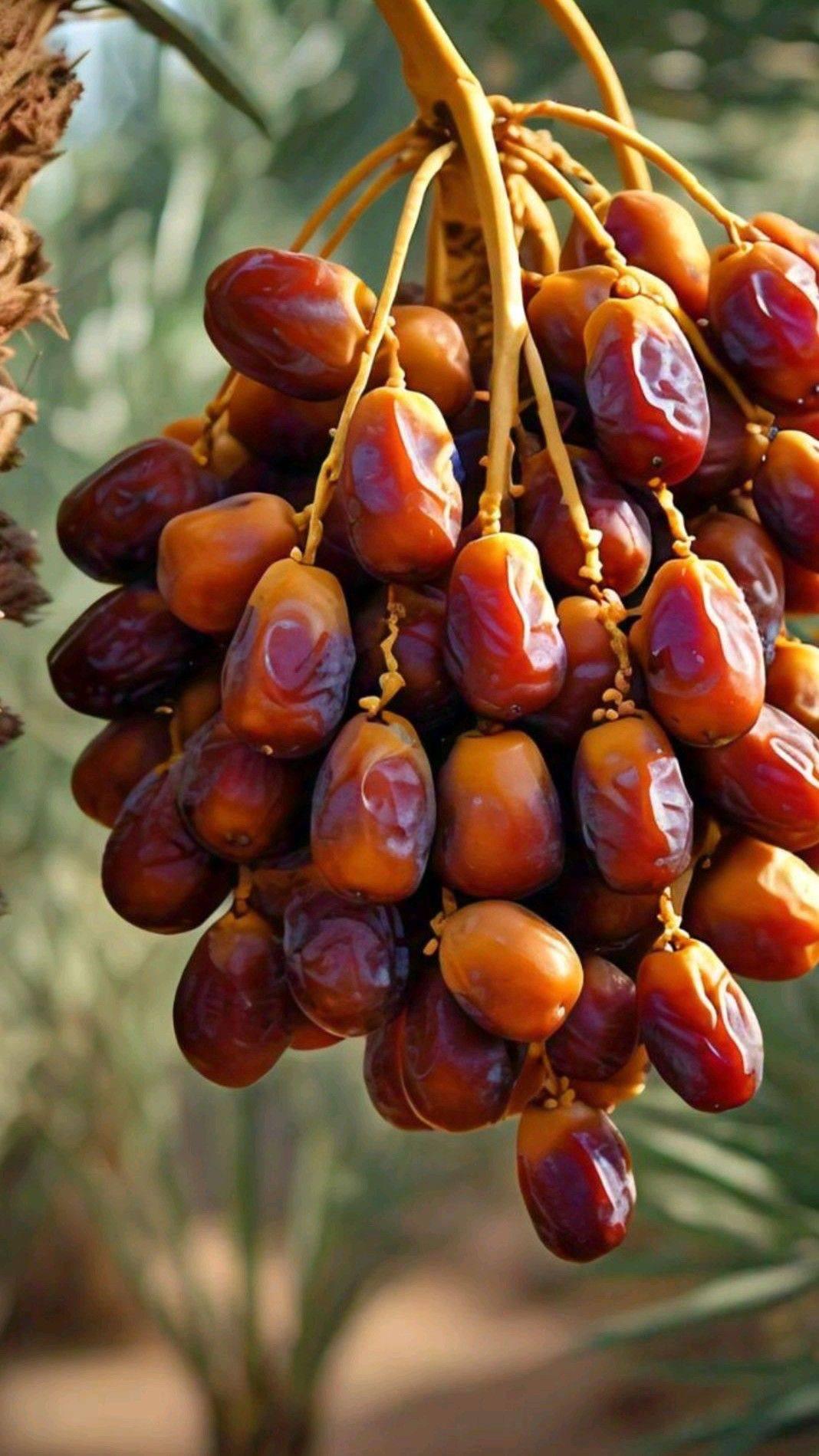
From the southern oases of Iran—Hormozgan, Kerman, and Khuzestan—date palms have offered shade, fruit, and trade for millennia. Persian poetry calls the palm “the mother of the desert,” a tree that nourishes body and spirit.
Dates ripen in stages ( kimri → khalal → rutab → tamr ), moving from crisp and honeyed to soft, dark, and caramel-rich. Farmers climb the towering trunks to hand-cut heavy clusters, then sort and cool them the same day to protect texture and natural sugars.
Varieties & Quality
Mazafati, Kabkab, Piarom & More
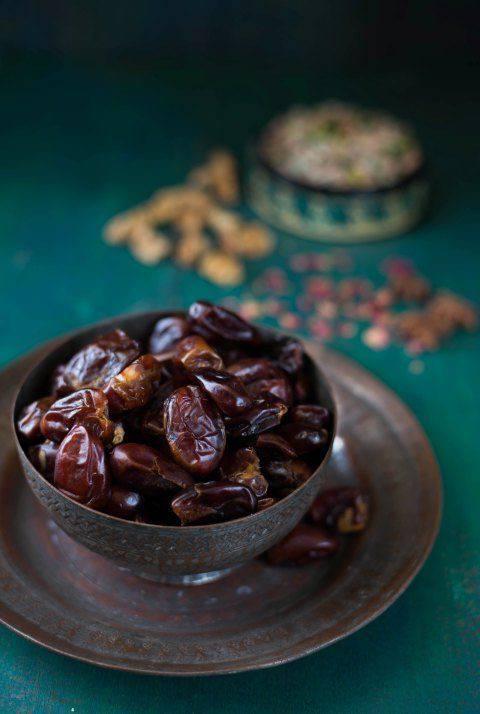
Iran cultivates many prized varieties. Mazafati (Rutab) from Bam is luscious and soft—almost jammy—with glossy skin and a melt-in-mouth bite. Piarom (the “chocolate date”) is elongated, semi-dry, and naturally elegant: thin skin, deep toffee notes, and a clean finish. Kabkab offers generous sweetness and a tender, fibrous body—perfect for cooking.
Quality shows in the skin integrity (minimal cracking), moisture balance (not sticky or overly dry), and a pure aroma—ripe caramel, cocoa, and warm fruit with no fermentation notes. We select graded lots with consistent size and careful cold storage.
Serving & Pairing
How to Enjoy
Serve slightly chilled for the best texture. Split, pit, and fill with walnuts or almonds; drizzle with a thread of saffron-honey; or pair with aged cheeses. For breakfast, chop into warm sholeh-zard (saffron rice pudding) or fold into yogurt with cardamom.
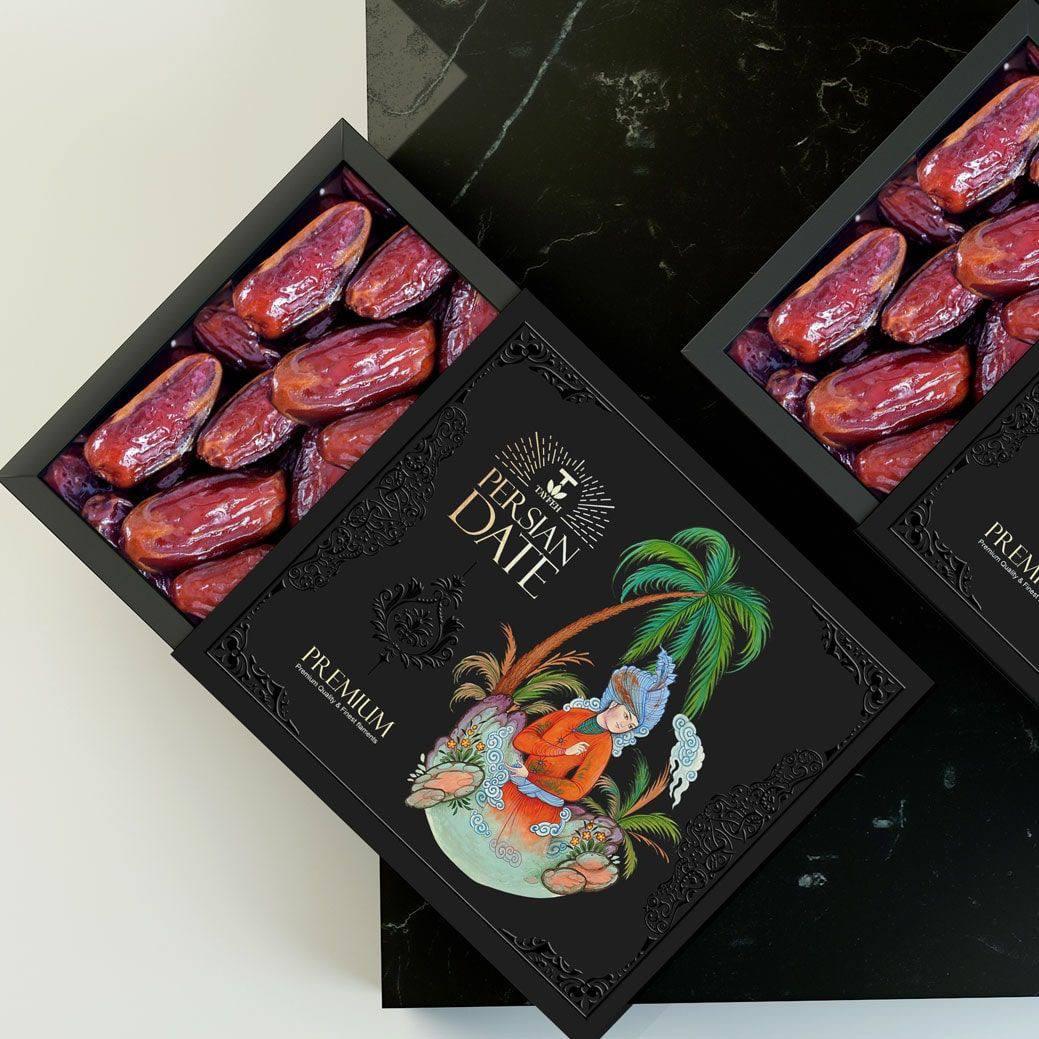
In cooking, dates bring body to khoresht-e beh and pilafs; blitz them into smoothies or energy bites; or bake into cakes with rosewater and pistachio. For gifting, our curated boxes celebrate the classic Persian way—simple, generous, and golden.